REVIEW: Elizabeth McCracken Tells Us How to Write Fiction
/
By Joan Silverman
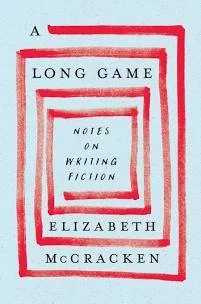
After 35 years of teaching, Elizabeth McCracken is finally spilling the beans. A former faculty member at the Iowa Writers’ Workshop and the current chair in fiction at the University of Texas at Austin, the acclaimed novelist and author of eight books has written a craft book on fiction. Even the author herself isn’t quite sure what that means — and, besides, she thinks a lot of writing advice is “hogwash.” This is classic McCracken — sage and opinionated, quirky, droll.
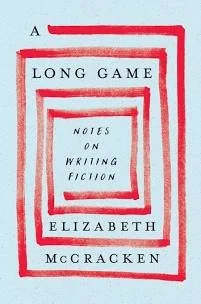
A Long Game: Notes On Writing Fiction zigzags around the writer’s landscape, pondering everything from punctuation to plot, from character to sentence structure; the problem with conjunctions, the unsung value of all those seemingly wasted words that go by the wayside.
“I don’t like craft books,” McCracken says. “I distrust both rules and optimism, and the combination gives me the heebie-jeebies. Craft feels like regarding a vast tapestry and saying, ‘This is how I wove the blue part.’”
Over the course of 280 vignettes — some as brief as a sentence, most a few paragraphs — the book finds McCracken in a genial, contrarian mood, avowing one thing, then blithely contradicting herself as she goes. She firmly believes that what works for her as a writer may, or may not, work for others. She insists that writers shouldn’t follow her lead but find their own path. And once they’ve staked their terrain, they should fiercely defend it.
McCracken questions assorted chestnuts that we’ve all been taught, such as writing what you know. “If you already know it — if there’s no mystery — what’s the point in writing it?” she asks.
Similarly, she shuns the notion that real writers must write everyday. “It’s excellent advice for those for whom it is good advice,” she says. “As advice, though, it's not universally useful.”
McCracken’s love of teaching is palpable throughout the book. She recognizes that she won’t be teaching forever, and that it means more to her with each year. Indeed, her favorite part of teaching is reading student work; being the first reader, a particular thrill.
“I don’t feel pride,” she says, “but something darker: exclusivity, as close to being in with the In Crowd as I have ever been.”
Readers may be surprised by the ups and downs of McCracken’s own writing career. The same author who has won major accolades for her work also has novels that remain unpublished. The editor who ferried her first three titles from manuscript to publication later turned down two of McCracken’s books.
“I spent years of my life working on those two rejected books,” she says. “Like all important things in my life, at first I was ashamed; then I was at peace; now I’m proud. Part of my bona fides. I’m just that tough.”
McCracken’s antidote for rejection, and pain of various sorts, is to write. Granted, she often goes for extended periods without writing, such as during semesters when she’s reading student work. Still, it is writing that comforts her, provides focus, and remains her default mode.
Note to readers who aren’t novelists or aspiring to be: If this book, at times, seems too writerly, just skip to the next vignette or chapter. Along the way, you’ll learn McCracken’s stance on imposter syndrome and travel, adverbs, italics, ambition, jealousy, and heartbreak.
“It’s a long game,” McCracken says. “That’s all I ever want to impart to my students. What matters is that you learn to get work done in the way that is possible for you, through consistency or panic. Through self-recrimination or self-delusion or self-forgiveness: every life needs all three.”
In the end, A Long Game is a must-read as much for its heart and humor as for its guidance.
Joan Silverman writes op-eds, essays, and book reviews. Her work has appeared in numerous publications including The Boston Globe, Christian Science Monitor, and Dallas Morning News. She is the author of Someday This Will Fit, a collection of linked essays.