Putting the “Boo” in "Books": 7 Scary Reads for Halloween
/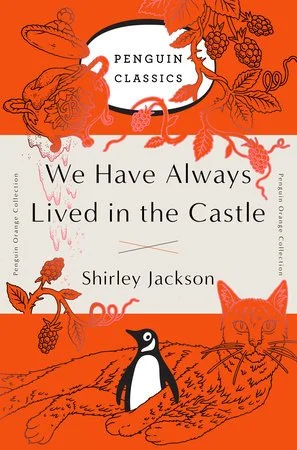
1. We Have Always Lived in the Castle by Shirley Jackson (Penguin Classics)
Jackson’s final novel, published three years before her death, surely merits revisiting for the Halloween season. We Have Always Lived in the Castle is told by 18-year-old Merricat, who lives with the last surviving members of her family (her agoraphobic younger sister and aging uncle) in a cavernous and haunting estate. Jackson skillfully transfers the isolation felt by the sisters to the reader, and a sneaking feeling of claustrophobia follows with each page.
2. Lapvona by Ottessa Moshfegh (Penguin)
In Lapvona, Marek, a young boy raised by the town witch, is sent to live with a cruel lord after committing a crime. He is then caught between the sinister motivations of each of the adults in the town, forcing him to reckon with what he must do to escape. Lapvona is an exploration of humanity’s basest urges, free will, and power dynamics. The folk horror setting brings in some whimsy and outlandishness to remedy the bleaker moments, but one still may find themselves considering the corruption, greed, and power of today’s world alongside Lapvona’s medieval backdrop.
3. The Legend of La Llorona: A Short Novel by Rudolfo Anaya (University of New Mexico Press)
Rudolfo Anaya’s novella is a reinterpretation of La Llorona, or the Weeping Woman, a Mexican cautionary folktale of a woman who drowns herself and her children upon discovering her husband’s infidelity. As many parents or grandparents tell the story, La Llorona now wanders the street at night, searching for ungrateful children – elevating her to a sort of “boogeyman” figure for Mexican children – especially during the celebration of Dia de Los Muertos, or Day of the Dead. Anaya weaves the folktale into a history of the brutal colonization of Mexico by the Spanish (in many versions of the story, La Llorona was the wife of a conquistador) and draws connections to the similar themes in stories like Oedipus Rex and Medea.
4. American Gothic Tales ed. Joyce Carol Oates (Plume)
From her haunting 1966 short story Where Are You Going, Where Have You Been? to her 2024 horror novel The Butcher, Joyce Carol Oates has masterfully documented the most macabre and unsettling aspects of American life for decades. American Gothic Tales spans over two centuries of American horror fiction– from Edgar Allen Poe, Washington Irving, and Charlotte Perkins Gilmer, to Stephen King, Don DeLillo, and Anne Rice. Oates has always provided a keen eye into the underbelly of American society, and this anthology provides a flawless lineup of her influences and contemporaries alongside those she herself has inspired.
5. Death Makes a Holiday: A Cultural History of Halloween by David J. Skal (Bloomsbury)
Beginning at the ancient Celtic festival Samhain and the pagan roots of Halloween, Skal sets out to understand how Halloween has become the “largest seasonal marketing event outside of Christmas.” He interviews costume salespeople, Christian fundamentalists, Wiccans, and Halloween fanatics to piece together what it is about Halloween that has captured the American mind (and market.) Fascinating nonfiction read, especially for those curious about the historical origins of a one-of-a-kind day.
6. Frankenstein by Mary Shelley (Penguin Classics)
Like We Have Always Lived in the Castle, no one needs to be told to read Frankenstein. It is quite possibly the genre defying horror novel, creating one of the most iconic characters and premises in literary history. However, with Guillermo Del Toro’s film adaptation hitting theatres this month, now is a perfect time to revisit this seminal novel – originally written by Shelley when she was only 18 years old.
7. Never Whistle at Night: An Indigenous Dark Fiction Anthology ed. Shane Hawk and Theodore C. Van Alst Jr. (Vintage)
Never Whistle at Night is a collection of horror fiction written entirely by Indigenous authors from across the Americas, some rooted in folklore and stories told to them as children, others derived from the experience of being Native in today’s America. Western horror fiction has long overrepresented Eurocentric voices, with villains and monsters often becoming vehicles for racist or xenophobic stereotypes. Never Whistle at Night is a brilliant amendment to this canon. In the tradition of many indigenous folk stories, authors use supernatural or gothic elements to broadly discuss such topics as colonialism, generational trauma, and reservation life.