Q&A: What's the Difference Between Autobiography and Memoir?
/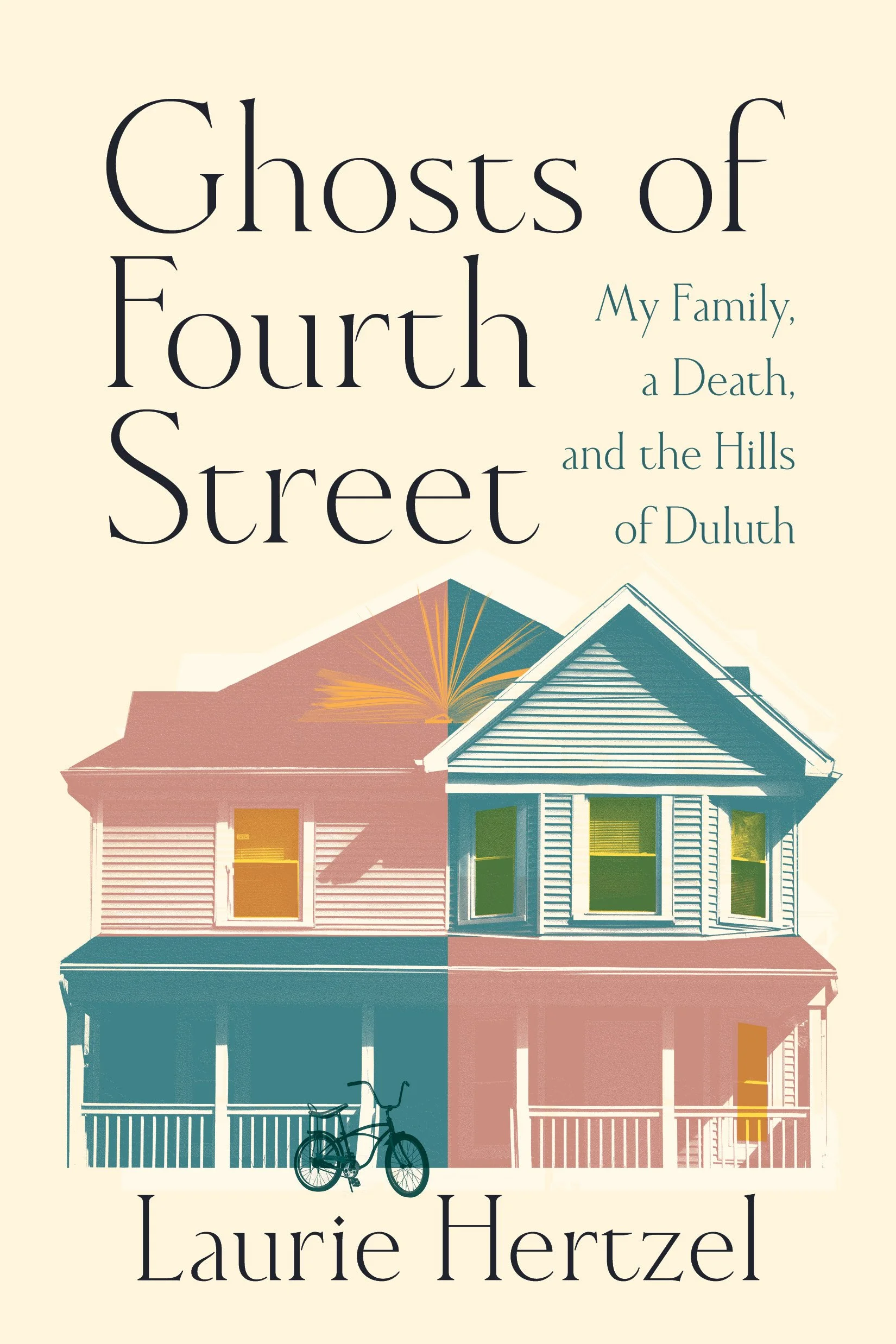
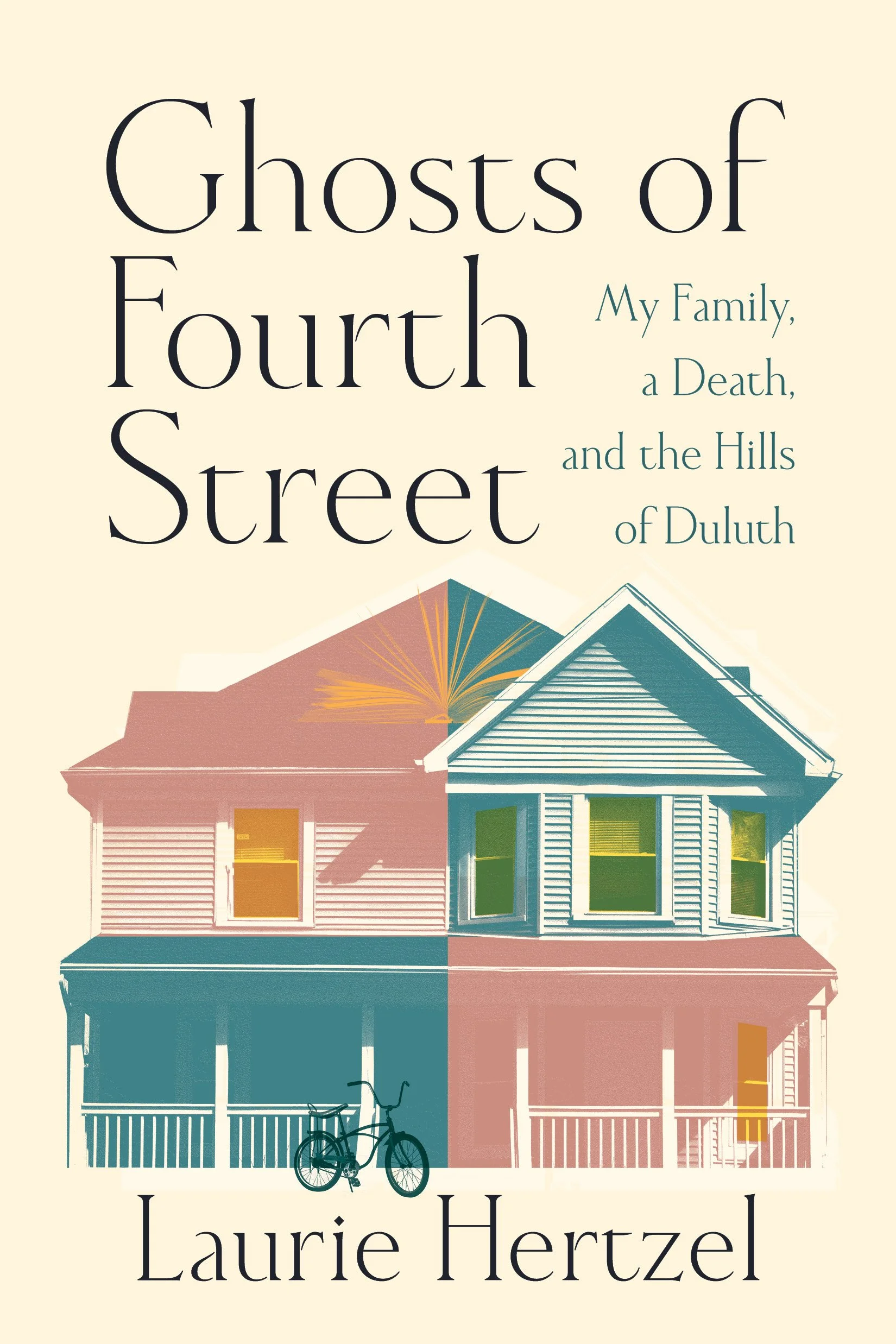
Laurie Hertzel, books editor of the Minneapolis Star Tribune for 15 years and a past President of the National Book Critics Circle, was the seventh of 10 children in her family. The Hertzels zigzagged through midwestern states until the volatile patriarch known as "Guv" landed a permanent job and sandwiched the growing family into a small house in Duluth, Minnesota. Hertzel got her first start as a journalist there and chronicled her coming of age as a reporter in News to Me: Adventures of an Accidental Journalist. Hertzel continues her work as memoirist in her engrossing Ghosts of Fourth Street: My Family, a Ghosts of Fourth Street: My Family, a Death, and the Hills of Duluth (University of Minnesota Press). Hertzel captures the chaos and drama of her family, particularly the pain after her poetically inclined older brother died in an accident. Hertzel reflected on the art of memoir with The National Book Review.
Q: You chaired the NBCC Autobiography Committee for three for three years, and Ghosts of Fourth Street is your second memoir. How do you see the difference between an autobiography and a memoir?
I think of an autobiography as a more scholarly, deeply researched work that covers the entirety of a person’s life. I think of memoir as a slice of a life, covering an important period of time but not trying to convey a whole life story. I should add that memoir still needs to be researched and made as accurate as the writer can make it, but it also relies heavily on the writer’s experience, memories and impressions. Autobiography, I think, is less intimate.
Q: Have you read memoirs that set a standard?
The fascinating thing about memoir is how the genre is growing and morphing and has been for I’d say the last 25 years. It’s hard to have a standard when there are so many ways to go about writing one, but I would say that any memoir that is transparent about accuracy—about what the writer knows and doesn’t know--sets a standard.
One memoir that I read last year and reviewed for the Washington Post was the fascinating We Should All Be Birds by Brian Buckbee (Tin House). Buckbee suffers from a debilitating illness that gives him terrible migraine headaches, among other maladies, so he wrote the book by speaking into a tape recorder and sending the transcriptions to his co-author, Carol Ann Fitzgerald. The book has lovely asides created when something odd happens as he’s dictating, and those asides end up as part of the text. It gives the book great immediacy and intimacy.
I just finished reading Dermot Healy’s memoir The Bend for Home, published 30 years ago but still fresh and engaging. One of his themes is the transience of memory, which you get right away from the opening scene: A vivid recounting of his birth, as was told to him—but then you find out it wasn’t his birth after all, but the birth of a neighbor, though he always thought it was his.
It’s a great reminder of the importance of story but not necessarily the veracity of story, one of the themes of the book. I am no Irish poet like Healy, but that is one of the themes of my book as well.
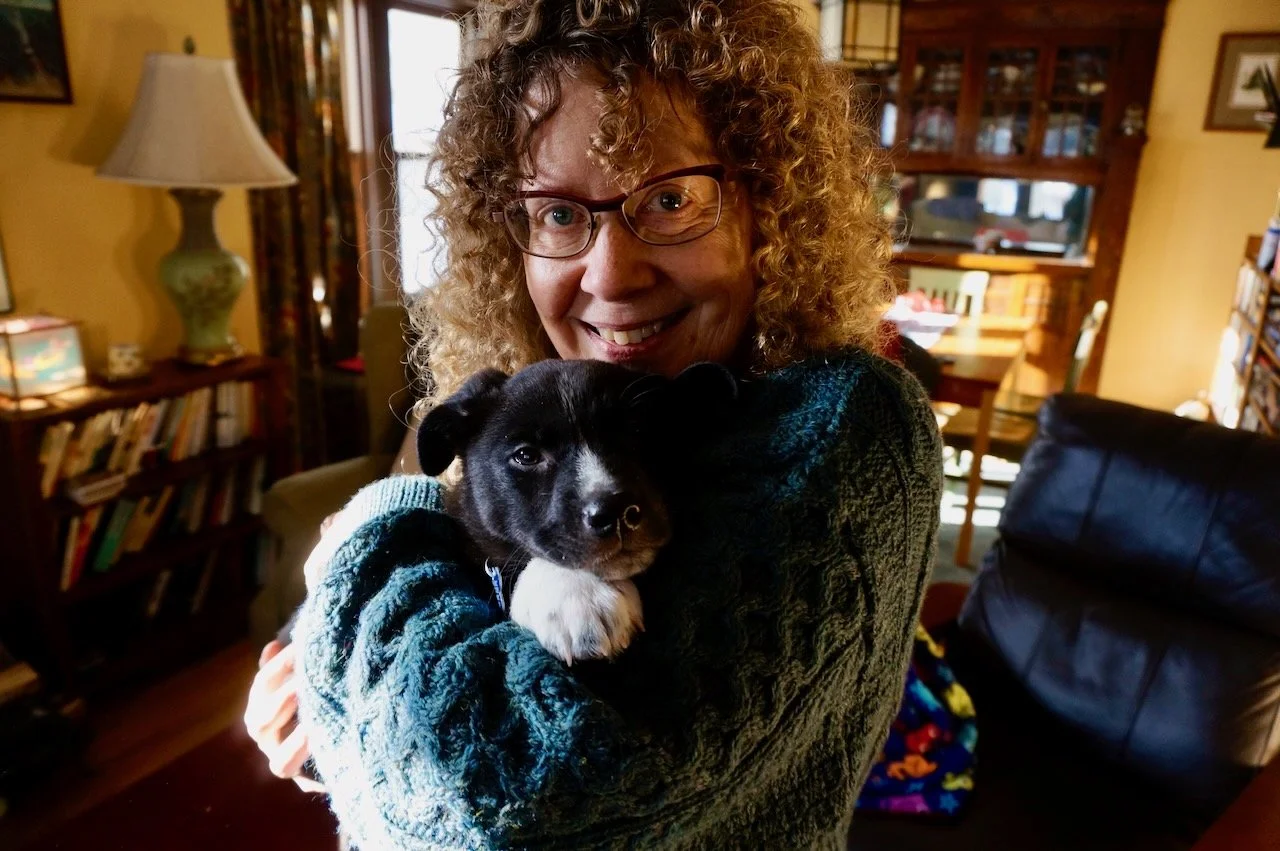
Q: You write from the perspective of a child-- you, as a bookish girl with wildly curly hair, the seventh of ten children, so how did you go about piecing together your past? Did you draw from any diaries or records?
A: There were two important times of my childhood that I have thought about for years—one was the summer I was almost 3, when my family lived with my grandparents in Missouri for six months, and the other was, of course, the year my brother died, which happened when I was 9.
I don’t remember the Missouri summer well because I was so young, but I remember the stories I was told about that time. When I began working on this book – which originally, I thought would be only about that summer – I talked to a lot of people who remembered it better than I did. Siblings, my mother, my aunt. (My grandparents and my father were all dead by then.) I gathered a lot of stories, but it quickly became clear that I didn’t have nearly enough to spin a whole book around.
The other time in my life, when my brother died, is something I’ve been writing about my whole life, beginning in high school—not for a book or for publication, but as a way for me to remember those days, those weeks, and also to remember my brother, who was nine years older than I and separated from me by five other siblings.
I worked on this book for a long time, never thinking it was a book. I wrote pieces of it for a blog I kept about 15 years ago, something I started to make myself write every day. Those stories grew into a book when I was working on my MFA in 2014, though I waited a decade to publish it.
I don’t have diaries from those years, but I talked to family members, and I got the sheriff’s report and the obituary and other documents from the day my brother died. Even for smaller details I talked to various experts, such as the city forester in Duluth to determine what kind of trees were growing along the street outside our house in the 1960s, and the city assessor in St. Joseph, Missouri, to find out when my grandparents bought their house. The “find-a-grave” website was useful in tracking down the names and birth and death places of ancestors.
Q: So, when did you become aware of the "Hertzel Curse”?
Oh, god, the migraine headaches that plagued us all! I had them when I was a very small child, and I remember my mother putting me in my parents’ big bed and giving me a Fiorinal, probably not a pill meant for children but by God it did the trick. One of my older brothers had the headaches much more often than I did, and my mother—a Hertzel in name only, as she pointed out repeatedly—got them monthly. They were terrible. I haven’t had one since I was in my 30s, though, so hopefully the curse has been lifted.
Q: Within the first pages of your memoir, you wrote that what had been “a house of chaos, now it was a house of loss.” Can you explain the pacing and structure of your memoir, and your decision to explicate the conditions of Bobby’s death in the last pages?
I open the book with the news that my brother has died, because I didn’t want his death to be a surprise—which felt melodramatic to me—and also because I wanted the knowledge of his impending death to color the stories that lead up to it. Many of the stories I tell are fairly ordinary, but I think—I hope—they carry extra significance for the reader knowing that Bobby’s days are numbered. So, when my father is cruel to him, or when Bobby runs away from home, or writes a particularly lovely poem, or when I tease him as I used to do, the reader knows that none of this is going to last. There is, I think, a sense of foreboding.
Q: As a journalist, how did you attend to the veracity of the multiple stories in your robust family drama?
I kept in mind—and I wrote in the prologue as well—the fact that memory is terribly faulty, that what we swear happened might not have happened, or might have happened in an entirely different way. I hewed to my firm belief that while memoir might have inaccuracies, the memoirist owes it to the book, to themself, and to the reader to not make anything up but simply to write what they know or believe to be true. To check what can be checked and not to rely on invented dialogue or detail.
My memories don’t always agree with the memories of other people who were there at the time. Usually I go with my own memory, because I don’t think others’ recollections are necessarily more accurate than mine. But there is one scene in the book where I give several versions of the same event because I did not witness it myself and I am not sure which version was true.
Q: Any final thoughts on your writing process?
I wrote this book gradually, over a number of years, and much of it was written in short bursts of 20 minutes or an hour. I think it’s important to keep in mind that a focused writer can get a lot done in a short period of time. Since this book came out I have started a Substack to revive my former blog habit of writing every morning.
Q: Did your dogs Rosie and Angus help?
You know, when I wrote News to Me, I read the entire manuscript out loud to my old dog Boscoe more than once. Boscoe has since died and I’m afraid that Rosie and Angus simply do not have the patience to sit and listen to me read. That said, I do a lot of writing in my head when I’m walking the dogs and so they did help in that way, just by being needy and wanting to be outdoors. They are miffed that they are not mentioned in the Acknowledgements, but I didn’t want to appear overly twee.