Review: Anne Fadiman's Collection of Essays is About a Pet Frog, and So Much More
/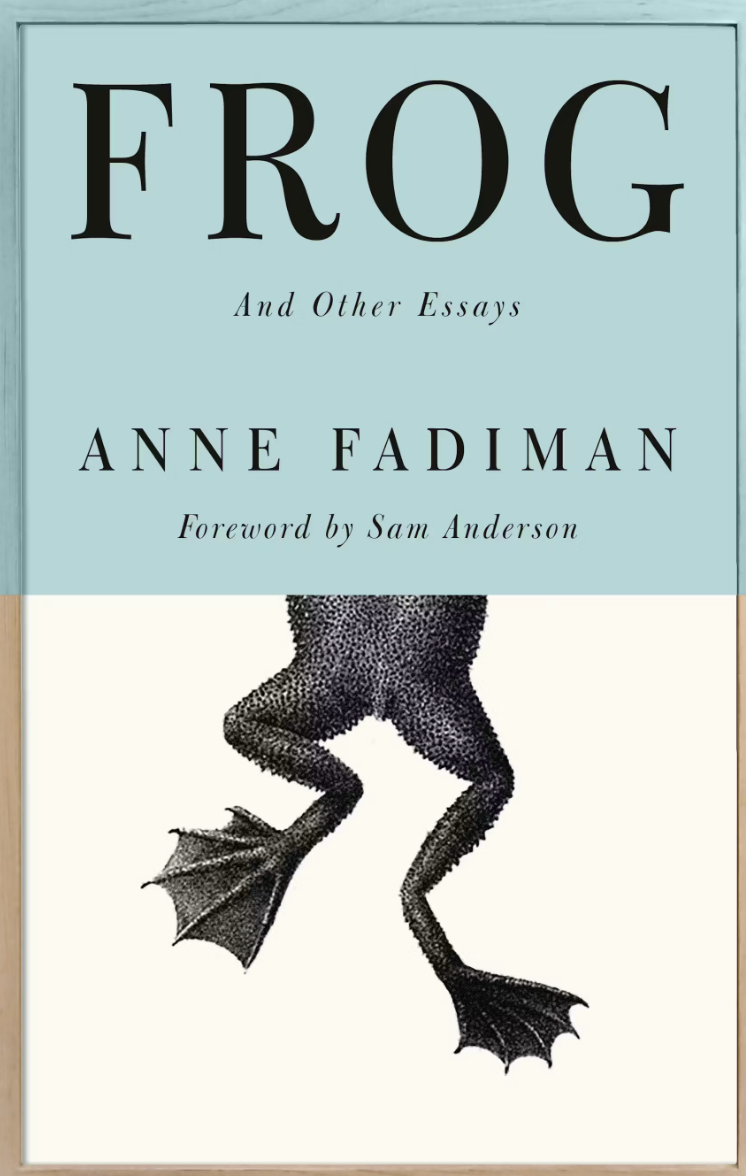
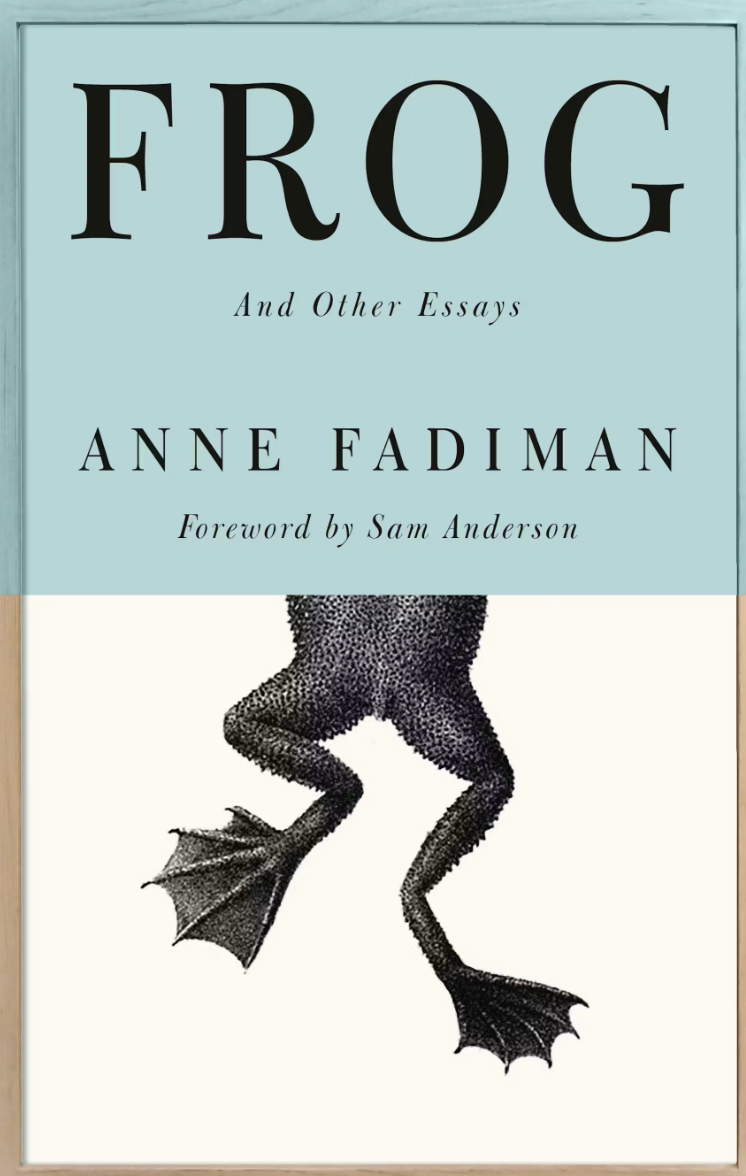
Anne Fadiman, “Frog and Other Essays”
Farrar, Straus and Giroux, 192 pp.
By Ann Fabian
Back in the day when you could ask students to read a whole book (25 years ago, let’s say), I was teaching a class at Rutgers called “The Contemporary American.” I assigned Anne Fadiman’s “The Spirit Catches You and You Fall Down: A Hmong Child, Her American Doctors, and the Collision of Two Cultures,” her extraordinary account of a child with epilepsy in an immigrant community in northern California. “You will be amazed,” I told those students, sure that I’d found a perfect account of contemporary Americans, and in a book they would remember.
I like to think that some of those New Jersey kids were amazed and that a handful of them do remember reading that book. I was and I do. And reading it turned me into a forever reader of Anne Fadiman, a fan of the beautifully-wrought essays she collected in “Ex Libris: Confessions of a Common Reader” (1998), “At Large and At Small: Familiar Essays” (2007) and “The Wine Lover's Daughter” (2017). And now we have “Frog and Other Essays.”
There are seven Fadiman essays in this book. They describe a pet frog, Samuel Taylor Coleridge’s son Hartley, an HP Laser-jet printer, the pronoun they, a Yale class moved onto Zoom in the spring of 2020, a newspaper published by Robert Falcon Scott’s first Antarctic expedition, and a student who died in an accident weeks after her graduation.
I sat down and read them all. And then read them again. I’m not sure the book is meant to be read that way (in one sitting or two) and now I find myself toggling between the whole and its parts. Fadiman is a generous writer, and the parts here let us into her world—her family, her pets, her students, her printers, and her particular obsessions with grammar and polar exploration. I’m also sure she had a plan for the sequence of the essays and a thought or two about what linked them.
The book starts with a dead frog, who’d spent six years in her freezer. It’s an essay about family, pets, time, and death, I suppose, but it’s also hard to miss its kinship with that other great American animal essay, E.B. White’s “The Death of a Pig,” which first appeared in an issue of “The Atlantic” in January 1948. A frog buried under a weeping cherry; a pig beneath an apple tree. A dachshund called Typo usurping whatever affection might have gone to the frog; a dachshund named Fred serving as a “dishonorable pallbearer” for the dead pig. And an essayist’s instinct for an event, often small and maybe absurd, that shifts everything. “Once having given a pig an enema, there is no turning back, no chance of resuming one of life’s more stereotyped roles,” White writes.
For Fadiman, there might be no turning back from once having bought a “Grow-a-Frog”; once having had a student explain their pronouns; once having purchased a Hewlett-Packard LaserJet Series II printer (weighing in at 50 pounds, but good at printing); or maybe once having discovered that unhappy Hartley Coleridge thought of founding an “Ugly Club.”
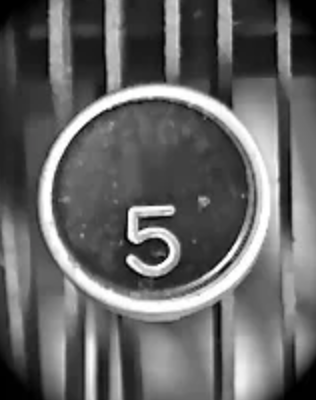
I liked seeing a tribute to White in the frog essay, a way of acknowledging Fadiman’s place among her favorite writers “in my own genre John McPhee and Ian Frazier and Joan Didion and E. B. White,” she writes. Of course, the essays are about writing—the practice of writing (late at night or in a rented cabin without internet), the tools of writers (a quill pen, an Olympia, an Underwood No.5), and the joy of encountering the ambitious writers who are her students.
Fadiman sometimes detours into history, particularly with her essays on Hartley Coleridge and “The Polar Times.” But “Frog and Other Essays” is a book hatched this decade, a pandemic book of a sort. Death stalks its pages. Not always in a frightful way but as one fact among the many with which we live: the body of that frog in the freezer; a dead printer cannibalized for parts; English explorers frozen in polar ice; and in the last essay, “Yes to Everything,” the devastating death of a talented young woman. There is no absurd twist in this last essay, it’s just sad.
Still, I put the book down, grateful to have become a virtual Fadiman student, at least for a few hours. If friends ask, I will tell them I read her essays, one at a time, as a break from our present chaos, the gift of fine writing delivered in less than an hour.
Ann Fabian has taught American Studies and History at Yale and Rutgers, written a book about people who collected human skulls and an essay about Mary Cynthia Dickerson, the author of “The Frog Book.” Like Fadiman, Dickerson had a keen interest in amphibians and Arctic explorers.