Q&A: What Rights Does a River Have?
/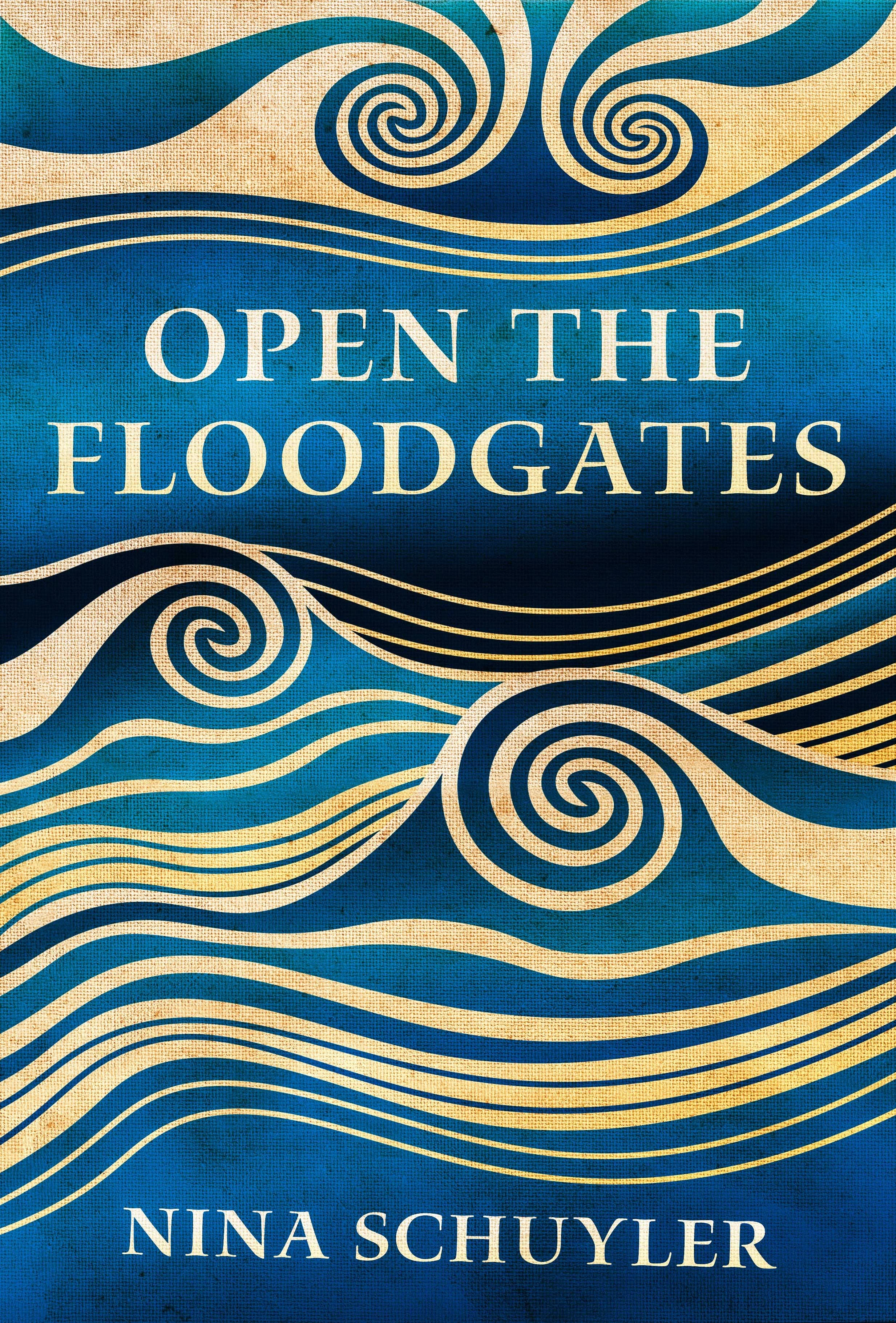
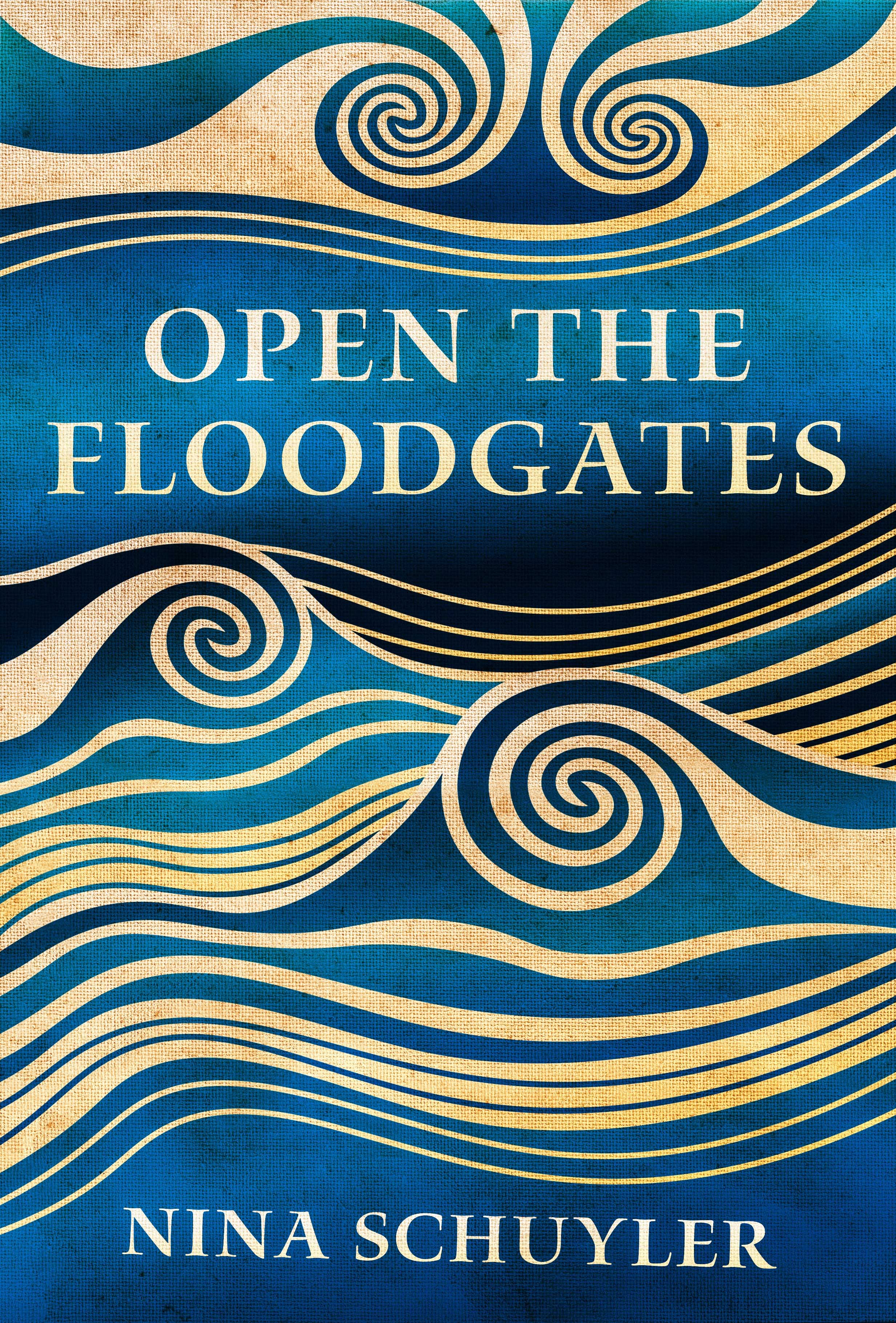
Few contemporary novelists are as fresh and imaginative in their examination and dramatization of profound moral questions as Nina Schuyler is. In her new novel, Open the Floodgates (Reverberations Books) Schuyler, an attorney and a writer and writing professor, transforms an extraordinary legal premise into a suspenseful and beautifully written work of fiction: a river appears in court to argue for its right to exist.
Inspired by the growing global movement to grant legal personhood to natural entities, Schuyler blends courtroom drama, magical realism, and ecological inquiry into a novel as intellectually daring as it is emotionally affecting.
Rather than a bleak vision of environmental collapse, Open the Floodgates invites readers to imagine a radically different relationship between humanity and the living world—one rooted in interdependence rather than domination. Its chorus of voices, which includes humans, animals, birds, and the river itself, challenges conventional notions of agency and consciousness and reminds us that the boundaries separating us from nature are largely of our own making.
In this conversation, Schuyler discusses the legal and philosophical foundations of her new novel, the exhilaration of abandoning traditional narrative constraints, and why hope remains an essential ingredient in fiction that looks closely at the effects of humankind’s obsession with profit and growth at any cost. -- Christine Sneed
Nina Schuyler discussed Open the Floodgates for with Christine Sneed for The National Book Review
Q: The central conceit of Open the Floodgates—a river going to court to assert its right to exist—will likely strike many readers as unusual. What inspired this idea, and when did you realize you wanted to write a novel about it?
A: When I went to law school, one of my favorite classes was Water Law. Since then, I’ve followed the legal developments in this area, and one of the most intriguing has been the countries, local jurisdictions, and indigenous populations that have granted personhood to natural entities. In 2008, Ecuador was the first country to grant personhood rights to Nature. New Zealand came along in 2017 and gave personhood status to the Whanganui River, as well as a forested valley and Mount Taranaki, which is considered an ancestor by Indigenous people. The cloak of personhood is a fascinating blend of Western law and indigenous belief, which, as I understand it, views natural entities as alive.
Let me back up. In every fiber of my being, I feel compelled to do something about the climate crisis. I’m not good at many things, but I can write. And I kept thinking the personhood concept has all the elements of a story, in part because it's not only a fundamental shift in the legal frame, but also a new mindset—at least for the Western mind. Under the Western legal system, everyone and everything is either a person or property. Personhood laws move what has been considered property into the person category, meaning they can’t be owned or harmed; they have rights and responsibilities.
As I followed the trend, my imagination began to play. What if a river went to court? Just flowed right up the concrete steps and into the lobby and the courtroom? It sounded like a playful and enchanting way to write about the climate crisis and our relationship with the other-than-human. I wouldn’t be pounding anyone on the head with dread and despair. The River might be a mesmerizing point of view: to see the world through the lens of the River—how astonishing that would be.
Q: Many courtroom dramas ask, “Who is right” Open the Floodgates seems more interested in asking, “Who—or what—gets recognized as worthy of moral consideration?” Was that always the novel's deeper concern?
A: In early drafts, I was just figuring out the story—furiously writing writing to discover. After several drafts, I realized those were the stakes: who or what gets recognized as worthy of moral consideration. It’s a profound question and upsets the traditional way of viewing the world. For so long, at least ever since Descartes, the Western mind has divided the world into subject and object. Humans are subjects and everything else is an object (and so easily humans turn other humans into objects). But with the personhood movement, the nonhuman is now a subject, with rights and responsibilities.
What we viewed as inert or a machine (Descartes’ view), and therefore a resource, is no longer. And what if we went one step further: the nonhuman is alive, and, as we increasingly find with animals, is sentient with an inner life. And has intelligence. A desire to live. Then what? How should the River be treated? The whales? The trees? Shouldn’t these living beings have a voice? Shouldn’t their lives be valued and taken into consideration before they are chopped down or polluted or ripped up?
Q: A river doesn’t argue for itself in human language, yet your novel asks us to hear its case. Did writing from the river’s perspective require you to rethink what constitutes a “voice” in fiction?
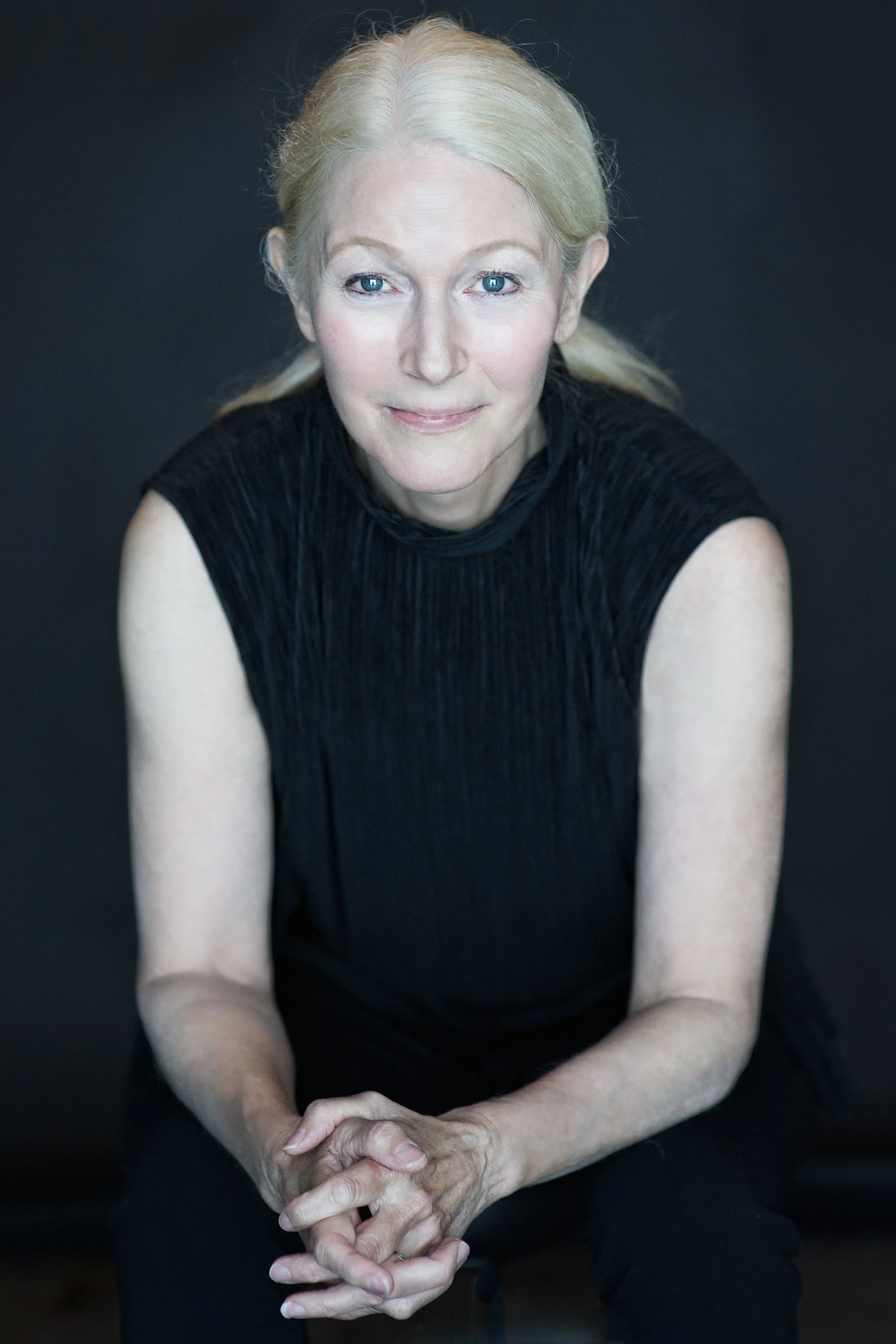
A: As with any character, I thought about the River’s idiosyncrasies and history: what makes a river a river. What are its unique qualities that shape its voice, both its inner and exterior voice? The answer determines diction, imagery, syntax, associations, on and on. This River is about three million years old, so it is a vessel of memories. It knows everyone in the courtroom, and in some cases, knows their ancestors, too—the great, great great, great relatives.
The River knew who to ask to come to court to argue on its behalf; knew who cared about it, even loved it. It remembers how the land used to be, populated by cottonwood trees and so many fish along the gray rocks. It’s baffled by the courtroom and rules and finds it nearly impossible to sit still because the fundamental essence of a river is movement. And it’s never been in a rectangle before or up so high off the ground.
Here’s the River in the courtroom: “The River spots a window and hurries over to it, pressing itself to the cold glass. The sun is smashing the horizon and the pigeons are on the ledge… Look, thinks the River, a tree pouring out tiny buds of green. Look, people so small as if they can’t hurt an ant.”
All of that informed the voice and was thrilling to try to imagine how it would view the human world. After a break in the court proceedings, the River heads back to court wondering: “How do people do it, doing things they despise—what happens to them? What will happen to the River-person now that it’s a person? I beg everything.”
Q: One of this novel’s most striking qualities is its omniscient point of view, which moves fluidly among humans, animals, birds, and the river itself. Was this your POV choice from the start or did you decide to use it after you'd been working on this book for a while?
A: This oceanic point of view evolved naturally and then ecstatically. I started with the River and then the Judge, then came the Judge’s wife, and the pigeons, who are peering into the courtroom, and I wondered why stop there? And so, I began to play—play and playfulness are the operative words for this book and its evolution. A big storyteller voice came in, opinionated and keen to tell the story.
The voices multiplied to the dogs, ducks, human witnesses, horses, the muddy bottom, the cottonwood tree, on and on. I didn’t know if it would work, so it was a little frightening, and it was also exciting in that hot rebellious way of tossing off traditional rules of narration. I’d never done something like this before, not to this extent. But why not risk everything? Go ahead and be a little delirious and upend the usual frame. What I kept hearing in my mind was Ursula K. Le Guin who said at a lecture, “We’ve tried objectifying the nonhuman world, and look where it’s got us. Maybe we try to subjectify.”
OK, Le Guin, I’m doing this. And I think she’s right that humans are more inclined to care if there’s some human-like aspect to the nonhuman being.
Q: Throughout the novel, the river becomes a metaphor for interdependence, and it’s more and more apparent as the story progresses that separating humanity from the ecosystems that sustain us is, ultimately, an illusion. Was interconnectedness the novel’s organizing principle from the beginning, or did it emerge through revision?
A: It was there at the beginning; I just didn’t know how far the interconnectedness would reach. I agree with Robert Creeley, who said form is an extension of content. Everyone in this town has a relationship with the River, and ultimately the River has a relationship with the people, and all the life that has come to the River for water, to hear it gurgle and swirl, to watch it flow, to settle them, calm them. I hope that the fluid point of view also simulates the interconnectedness, too, and reminds the reader that we’re not so different from the River with our little rivers and blood flowing in our veins like a river’s natural tributaries.
Q: There are moments in Open the Floodgates that feel almost mythic alongside passages grounded in legal argument and contemporary realism. How did you arrive at the novel's tonal balance?
A: I think once I stepped into magical realism, I felt tethered to realism and also something else, maybe the magic found in the real world. Or maybe it’s awe. When the River moves on the page, it sways side to side, which meant the language had to be compressed to fit the swaying motion. That, I think, invited the poetic and maybe the mythic. The River, compared to humans, is ancient. The courtroom drama and language provided concrete grounding, as well as the human characters with their day-to-day concerns—jobs, worries about health, raising children, love, romance, on and on.
It became a matter of feeling the pulse of the story and not letting it swing too far in one direction or the other. Virginia Woolf’s work was definitely a model and inspiration, the way she heads into the interior and then comes back to the concrete real world, and there is Mrs. Dalloway perched on a curb, waiting for Durtnall’s van to pass.
Q: Despite the urgency of the environmental concerns dramatized in Open the Floodgates, I never found it despairing. Were you consciously trying to leave readers with hope rather than resignation?
Absolutely! I can’t read apocalyptic or dystopian climate literature. It cracks or implodes something inside me, under its weight, something vital to me, which might be hope or a love of life, I’m not sure. Writing about the ecological disaster is a hard balancing act between hope and truth, but it’s an important one for me. Too much brute fact, and you’re heading into despair, nihilism, and apathy. Too much hope, and you’re delusional. Fortunately, because the River finds itself in such unusual situations, there were many opportunities for humor—yes, actual humor (in my opinion).
Here’s the River looking at the Judge: “The River studies the man perched high at the front of the room, all dressed in black, big-winged like a crow. But this crow is enormous; this crow could never fly. Clumsy, doesn’t know where to put its wings. Flap, flapping, a tired crow, a big-eater crow.”
Q: Your novel challenges the idea that productivity is synonymous with progress. Do you think many contemporary fiction writers are increasingly pushing back against this particular cultural narrative, or is literature uniquely positioned to question it?
In this technological age, humans feel the insidious pressure to become machines, with our primary values being productivity and efficiency. Since the Industrial Revolution, there has been this pressure, but it’s intensified because of the advancement of artificial intelligence and the sense we’re in competition with machines for our jobs. We need to work harder, become more efficient, or we’ll be replaced.
Yet so many people feel lonely or exhausted or are living without meaning. We forget we’re also animals and the things we value most—relationships, romance, love, eating good food, playing—are physical and demonstrably animal. That forgetting not only has psychic consequences, but also, as Melanie Challenger writes in How to Be Animal, devastating consequences for the environment. We are animals that don’t think we’re animals, she says, and so we don’t know the right way to behave towards life and nonhumans. Meanwhile, as we claim exceptionalism and increasingly become machine-like, the living world is in crisis.
The definition of progress means gradual betterment. In the novel, the Z Corporation arrives in court because it, too, is a person. In the 19th century, the law granted personhood to corporations. The Z Corporation reminds the court and jury that if the River has its way, if it exists and thrives, productivity will drop—people will suffer. Jobs will have to be cut. “’Without me,” says the Z Corporation, you don’t have anything. That’s the truth, and to say otherwise is a big fat lie.’ The Z Corporation glares at the River as if it is a big fat lie.”
Yet there is a sense that while we are busy being productive, working harder and harder, something profound is missing. According to the U.S. Bureau of Labor Statistics, in 2025, thirty-one percent of private industry workers received 10 to 14 days of paid vacation after one year of service. After 10 years of service, 31 percent of private industry workers received between 15 and 19 days of paid vacation.
I think literature is uniquely positioned to hold up a mirror and show us to ourselves. A story is a safe way for someone to scrutinize and reevaluate and ultimately reflect. You can say, I’m reading about other people, fictional people at that—it’s not me. Stories say to your brain, Let’s live over here for a while. Let’s see how this feels. Let’s consider other possible ways of being in the world.
Q: You’ve written across genres and forms in your body of work. What continues to draw you to experimentation and innovation, and what are you working on now?
A: I’m always looking for a challenge, something I haven’t done before. Whatever I write about must matter deeply, so I keep coming back to the climate crisis. A novel takes a long time for me to write. I spend an inordinate amount of time on sentences—the sound and rhythm, the metaphors. I like to make the language dance and swivel, do unexpected things. A novel utterly consumes me, my thoughts, my other reading. It’s like living in a dream. The dream and that is the novel, and then it’s still there, as I take care of my son or hike the hills with my husband. Right now, I’m working on a new novel and have a blueprint of a possible storyline, but not much else and it’s lovely.
Christine Sneed’s most recent books are Please Be Advised: A Novel in Memos, Direct Sunlight: Stories, and The Virginity of Famous Men. Her stories have appeared in New England Review, Story, The Best American Short Stories, The O. Henry Prize Stories, Ploughshares, Boulevard, and other publications. Her novel Little Known Facts was a New York Times Editors’ Choice selection, and she’s received the Grace Paley Prize, Ploughshares’ Zacharis Prize, the 21st Century Award from the Chicago Public Library Foundation, and has been a finalist for the L.A. Times Book Prize. She lives in Pasadena, California and teaches for Northwestern University and Stanford Continuing Studies.