REVIEW: After 200 Years, Lewis & Clark's Explorations Continue to Fascinate
/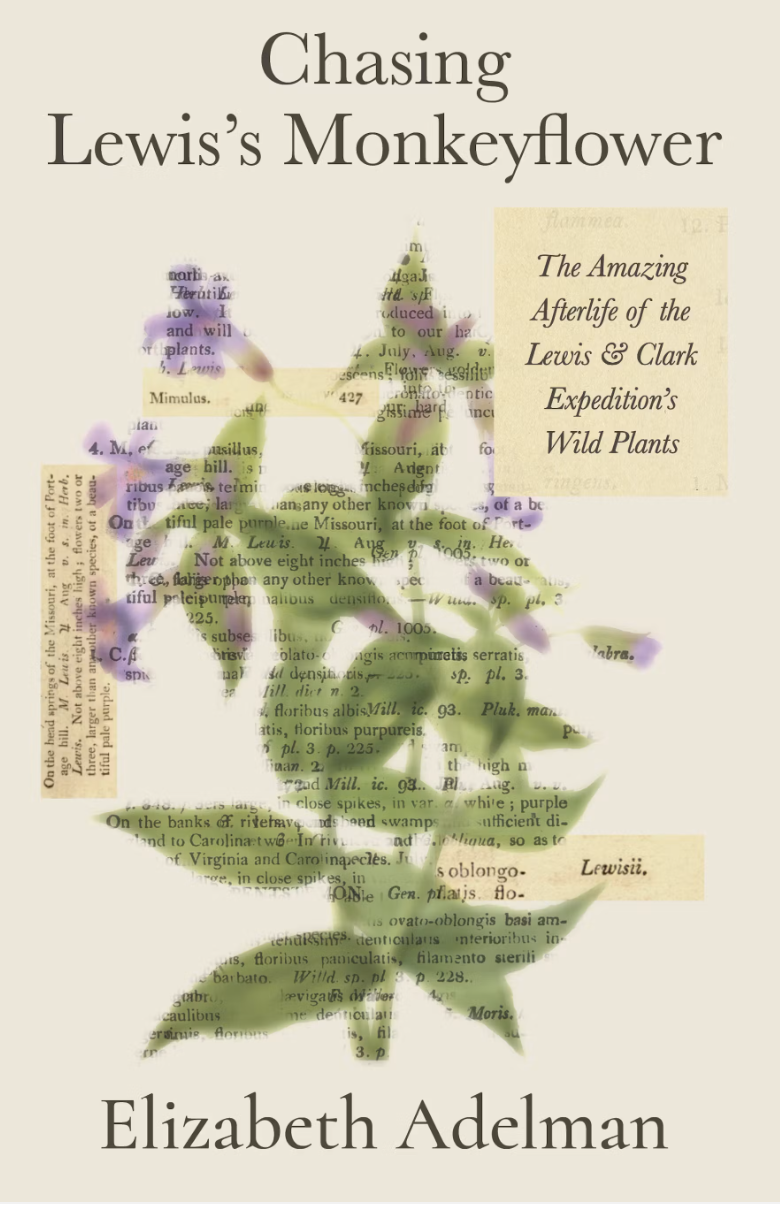
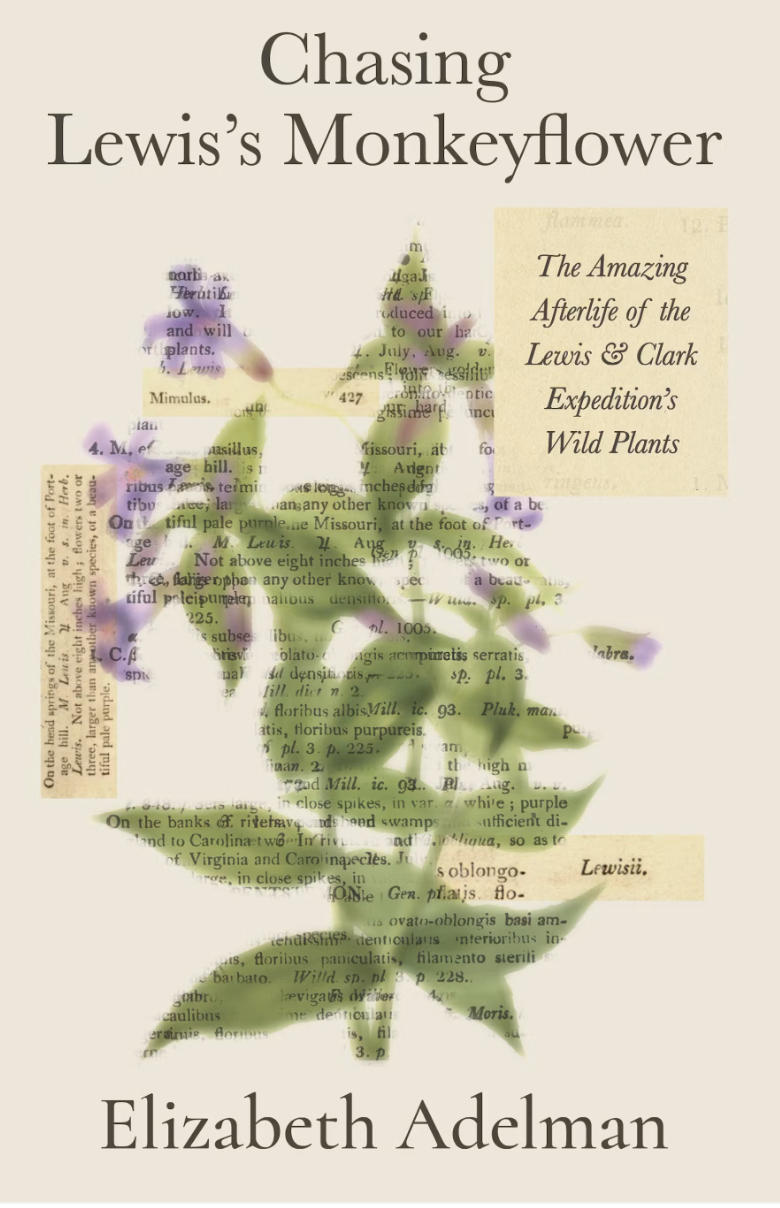
Chasing Lewis’s Monkeyflower: The Amazing Afterlife of the Lewis & Clark Expedition’s Wild Plants by Elizabeth Adelman, Farrar, Straus and Giroux, 354 pp.
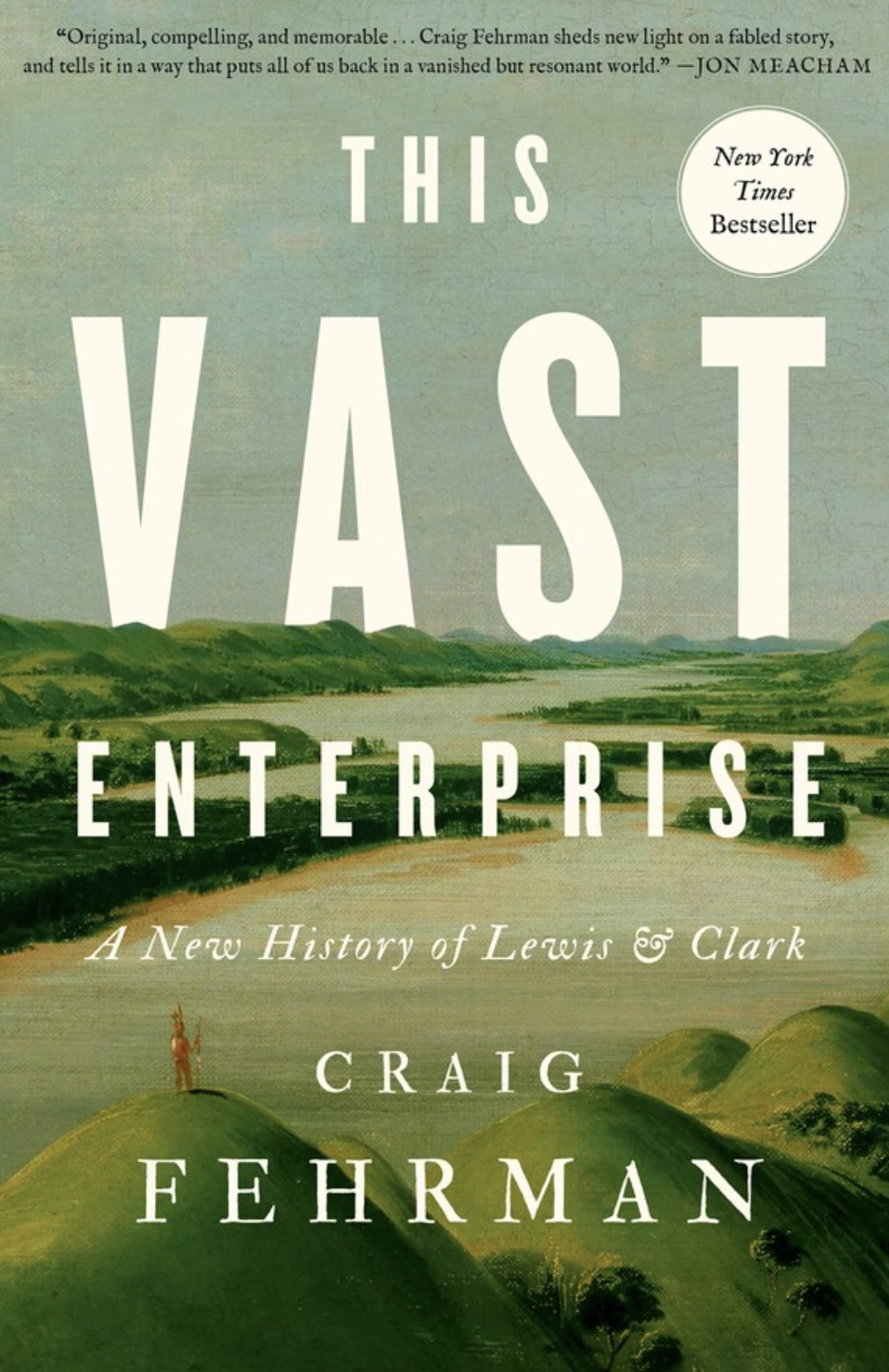
This Vast Enterprise: A New History of Lewis & Clark by Craig Fehrman, Avid Reader Press, 515 pp.
By Ann Fabian
My mother liked to tease book-writing academics, telling us to write books about things people already knew they wanted to know. Stop trying to be quirky and original. She wanted books on John Adams, or FDR, or Frederick Douglas. Lewis and Clark would be good, she said.
I’d push back, sure that by the early 2000s, with the spate of books commemorating the expedition’s bicentennial, we knew all we needed to know about Meriwether Lewis and William Clark and their Corps of Discovery: Thomas Jefferson’s instructions in 1803, the trip from St. Louis up the Missouri in 1804, the first winter at Fort Mandan, the trek over the Rockies and down the Columbia, the winter of 1805 on the Pacific, and their trip back east in 1806. We knew about the Louisiana purchase, encounters with Native peoples, the vital contributions of Sacagawea, the Shoshone woman who carried her baby along on the trip, York, the enslaved man Clark brought along, and Lewis’s unhappy end by his own hand. Some switched the perspective and let us recover a trace of the expedition in the oral histories of the Native people’s they met.
But two new books that came out this spring have convinced me that I owe my late mother an apology. Craig Fehrman’s This Vast Enterprise: A New History of Lewis and Clark takes on the epic voyage by breaking the story into the perspectives of its various participants. Fehrman works with accounts kept by Lewis and Clark and a few others, but he expands the picture to imagine what the expedition must have meant for members of the Corps of Discovery and for the Native peoples they encountered.
The voyage was a collective enterprise, American and democratic in its way, whose success was made possible by the diverse skills and expectations of its members and by good luck and wise choices made along the way. You will put Fehrman’s elegant book down with renewed respect for Lewis, Clark, Sacagawea, York, and especially, the Vermont-born farmer John Ordway and the Brulé Lakota chief Black Buffalo.
And if you read through the remarkable notes Fehrman has appended at the end of the book, you will learn a lot about how he went about his work. Like Lewis and Clark recruiting their crew, Fehrman enlisted historians, archaeologists, anthropologists, and psychologists, bringing them along on his own desk-bound voyage of discovery.
Elizabeth Adelman’s Chasing Lewis’s Monkeyflower: The Amazing Afterlife of the Lewis & Clark Expedition’s Wild Plants is an altogether different sort of book. Adelman is a lawyer turned nursery woman, whose focus is on the plants that Lewis collected and on the fate of the pressed specimens that he sent back, first to President Jefferson in Washington and then to the American Philosophical Society in Philadelphia.
My guess is that neither Fehrman nor Adelman could have written their accounts without Gary E. Moulton’s indispensable edition of the journals of Lewis and Clark, now available on line and searchable by keyword. Curious about dogs or prairie dogs or rain clouds, go to the website https://lewisandclarkjournals.unl.edu/
With Moulton’s help, Adelman gives us a reprise of the expedition, but instead of interrupting her account to explain Native diplomacy, the horrors of mosquitoes, or the habits of Grizzly bears, she pauses to watch Lewis collect and describe the native plants of the west.
Her story unfolds like this: “While they waited for the Natives to appear, Lewis successfully hunted plants, collecting meadow anemone, Anemone canadensis, and curly-top gumweed Grindelia squarrossa, at Tomwontonga village.” Or “[d]espite all the injuries and anxieties, on the fifth day Lewis described Rocky Mountain maple, Acer glabrum, and snowberry Symphoricarpos albus, with a ‘globular berry as large as a garden pea and as white as wax.’ Lewis collected its seeds.” The men repaired a mast and Lewis collected a bur oak and a prairie wild rose, Rosa arkansana.
Lewis was a collector, a disciplined and thoughtful observer, but not a trained botanist. His knowledge of Latin and Linnean taxonomy was limited, and he had to trust others to publish descriptions of the plants he found. In botanical literature, Adelman reminds us, the person who first describes the plant in a written publication—not the natives who use it or the person who collects it—earns a kind of immortality, a Latinized name fixed forever in the botanical record.
And here Lewis, who had planned to use his botanical collections in the books he would write, was ill-served by ambitious scoundrels, irresponsible drunks, debt-riddled naturalists, and rabid plant enthusiasts in the US and the UK. Lewis’s suicide orphaned his plant specimens in a way and they passed from the hands of disorganized Philadelphia naturalist Benjamin Smith Barton to the Saxon-born garden-man Frederick Pursh, known to take a nip too many when offered the chance.
Pursh apparently absconded with Lewis’s specimens, using them as a calling card to wealthy and well-connected British naturalists, who were very curious about North American plants and anxious to add rare specimens to their collections. They weren’t particularly interested in Lewis or Clark or their expedition. In the early decades of the nineteenth century, the plants mattered far more than the names of those who had collected them.
Her story can get a little weedy, as she dives into the complicated back stories of the many characters who tried to get their hands on the specimens from western America. She follows the plants on a zigzag course across the Atlantic and into a London collector’s herbarium, capturing the scientific competition of the late Enlightenment and the strange ways and financial struggles of impassioned plant people.
Over the years, librarians, researchers, and plant sleuths like her, have helped reassemble Lewis’s collections. But the most important character in Adelman’s retelling is the American botanist, Edward Tuckerman. Tuckerman, the son of a wealthy Boston merchant, was born in 1817, a decade after Lewis had sent his specimens off to Philadelphia. He graduated from Union College and went on to earn degrees from Harvard’s Law and Divinity Schools but spent the bulk of his career teaching botany to Amherst College undergraduates. He and his wife became friends with Emily Dickinson. He is best known as a great student of lichens and other mountainous plants.
He comes into Adelman’s story when he wanders into a London auction room in 1842 and bids on a mis-labeled lot that happened to contain several of the specimens that Lewis had collected. Worried about insect damage, he sent them to the Academy of Natural Sciences in 1856, where curators protected them from bugs but sorted them by botanical classification, not yet recognizing that it was their Lewis and Clark provenance that gave these specimens their special value.
Two centuries after Lewis pressed his plants, Adelman and other plant detectives are still turning up things that Lewis collected. Some are mis-catalogued, mis-labeled, or simply stored among botanical siblings, without a nod to their provenance. I was disappointed, I admit, that the wonderfully named monkeyflower of her title remains among the missing.
As one might expect from a nursery woman, Adelman ends the book with recommendations on “Fifteen Expedition Plants to Grow.” If you live along the route of the Corps of Discovery, you can add Clarkia pulchella or Erythranthe lewisii to your garden, knowing their roles in Native cultures, their place in the expedition and, thanks to Adelman, granting a bit of treasured botanical immortality to the expedition leaders.
Ann Fabian writes essays and reviews. She is working on the story of American botanist Amos Eaton and his stint in a New York jail cell.