REVIEW: Ali Smith's 'Gliff' is a Dystopian Novel that Focuses on the Kids
/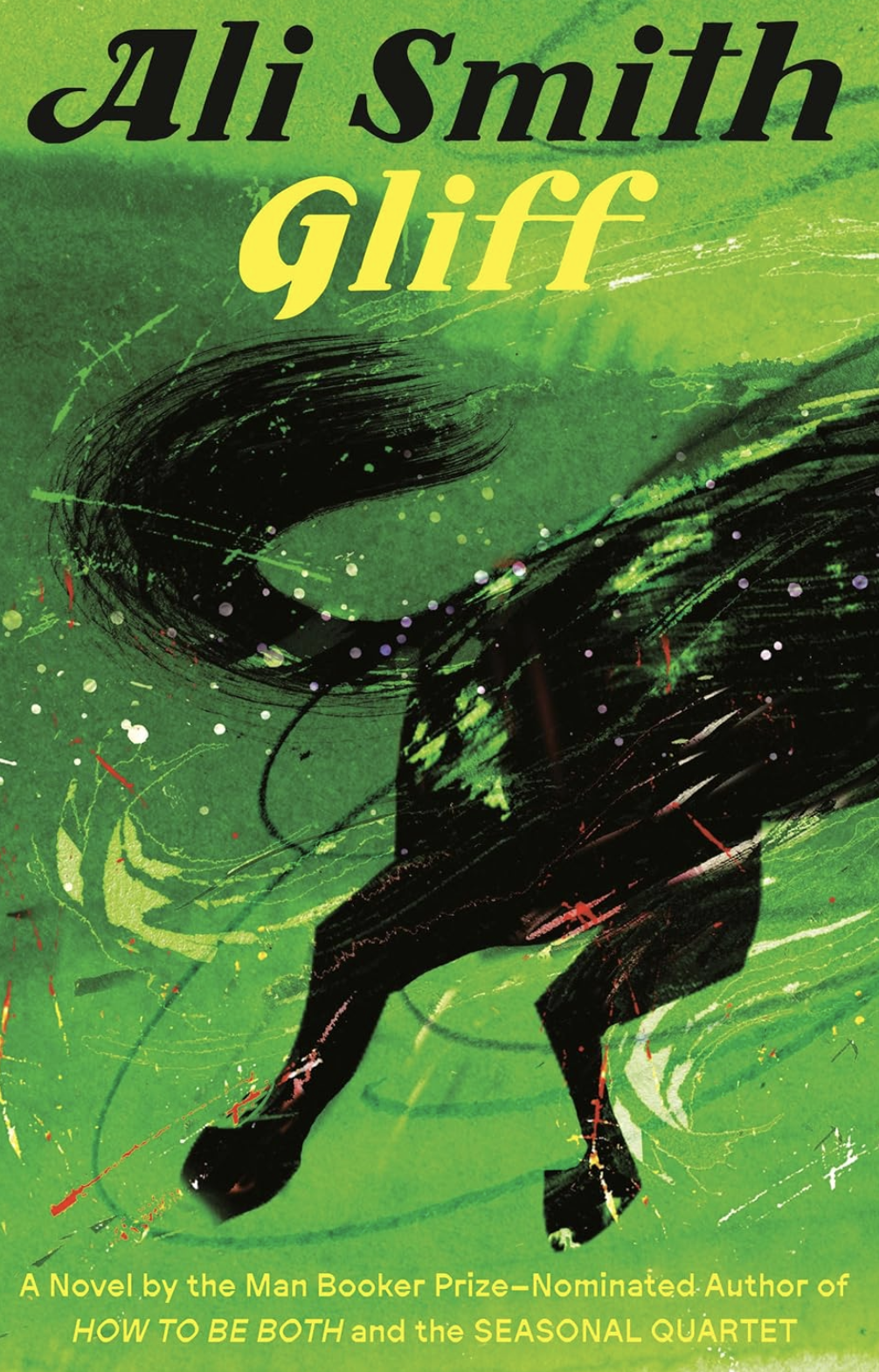
Gliff
By Ali Smith
Pantheon 281 pp.
By Jim Swearingen
It might seem somewhat rash to argue that the field of futuristic-dystopian novels has been picked clean. Writers will of course always craft new riffs on timeless stories. But technical advances in monitoring and surveillance that have occurred in recent years have surpassed virtually every tyrannical gadget in the fictional canon. When daily events render fiction more mundane than the latest headlines, a fresh take on Dystopia requires plot devices even more diabolical than the Soviet-style chaos afoot today.
In We, Yevgeny Zamyatin’s dystopian classic, his female subversive, I-330, observes that “Children are the only courageous philosophers,” and declares that “one ought always to ask the children, ‘what further?’” In her new futuristic novel Gliff, Ali Smith has written a unique riff on that observation. Borrowing control mechanisms and civilian paranoia from the classics of totalitarian-dystopian fiction, Smith traps her characters in a panopticon of cameras, informants, roving enforcers, and relentless data tracking. The system she creates blends invasive capitalism with political authoritarianism in a harassing regime as curious about people’s favorite toothpaste as their voting preferences. Every person in her futuristic world must be verified: identified, catalogued, and tracked. Meanwhile, her somnambulatory citizens trudge along, oblivious to their captivity, mesmerized by phones and smartwatches.
But Smith’s protagonists – indeed most of the central characters – are children, beings who hold a naive and unjaded view of dystopia. The book begins in menacing fashion with two siblings, Briar and Rose, left to fend for themselves after losing their mother and surrogate father, presumably dispatched in some nefarious manner by the state. As unverified (read: undocumented) minors, they must stay one step ahead of the authorities to avoid being “rendered temporary.” They ration their food and money, provide fake names to strangers, and hide from the authorities in abandoned buildings. Smith skillfully develops an anxious tension around the fate of the children, left to survive on their own.
Raised withou the synapse-numbing immediacy of electronic devices, Bri and Rose have learned to think for themselves and spot the hypocrisies within this coercive society. The two remarkably precocious siblings constantly play with language, the elder embracing its power to clarify, the younger bristling at its tendency to confine. And their wordplay reveals the absurdity of the system’s norms.
But, Bri, whose gender seems unclear, is eventually captured by the state’s roving enforcers and re-educated. We rejoin Bri years later, working as a plant supervisor at a dry goods factory – now a bureaucratic enforcer, rather than the target of the state. We know nothing of Rose’s fate until an injured worker lands in Bri’s office for discipline and retraining. The mutilated girl, Ayesha, reveals that she knows Rose, still an unverified fugitive. That chance encounter, along with flashbacks of Rose’s admiration, recall Bri to an older, better self.
Yet this sudden conversion from apparatchik to subversive remains unconvincing. While Bri uses a data security clearance to search for Rose and smuggles pain meds to the injured Ayesha, it is with a newfound icy demeanor and callous disregard for others that is defensive of Bri’s sinecure within the system.
Smith’s society also allows peculiar gaps in enforcement. Hidden stairwells accommodate completely private conversations, unmonitored by the state. A plant supervisor possesses the requisite authorization to delete huge swaths of personal data – permanently. The “supera bounder,” a line striping machine that cordons off condemned properties – and people – with red paint, is a rickety contraption that a child can – and does – tip over. But unlike other dystopian classics, we never hear from an authority figure higher than a stormtrooper in this tale. There is no O’Brien or Mustapha Mond to resist, no Captain Beatty to murder. Indeed, there seems to be no organized resistance at all, only pockets of unverified people attempting to survive underground.
As the compelling narrative dissolves, dreams, parables, and memories litter the final section of the novel, until we approach its improbable ending. Although flashbacks offer a possible explanation for Bri’s sudden alteration in character, Bri’s laudable heroics seem contrived. And Bri’s daring act of rebellion includes no plan for survival as a fugitive in a system that will be back again to even the score.
The frustrating thing is that Gliff could have been much better, with a more consistent narrative and a stronger ending. It feels like an intriguing draft of something that could resolve more powerfully, without the feeling of anticlimax. Even with these demerits, Ali Smith has written an intriguing book about living authentically in a world that finds such autonomy threatening.